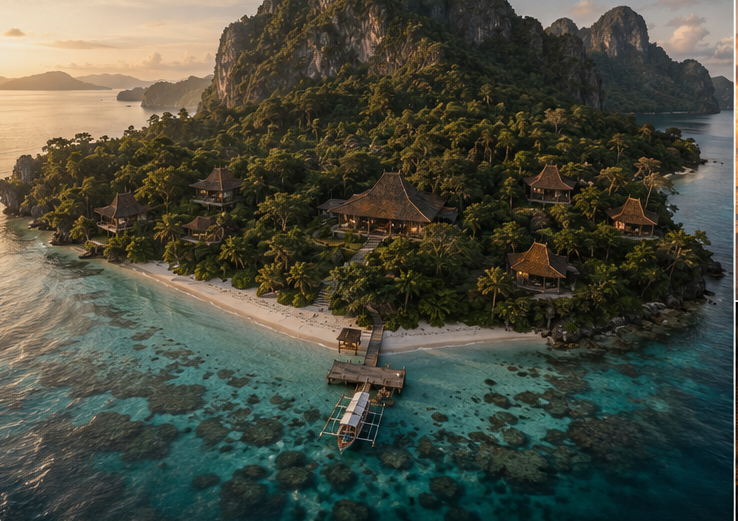
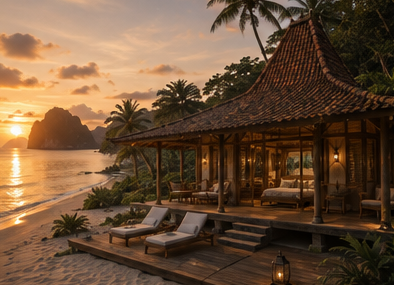
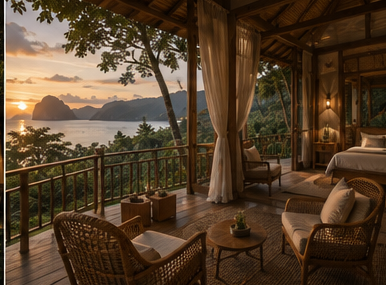
Malapacao Island offers a rare opportunity to develop a boutique private villa resort on 3,500 sqm of beachfront land in Bacuit Bay, El Nido — one of Asia's most sought-after island destinations — with a land lease structure that reduces upfront capital and maximises investor returns.

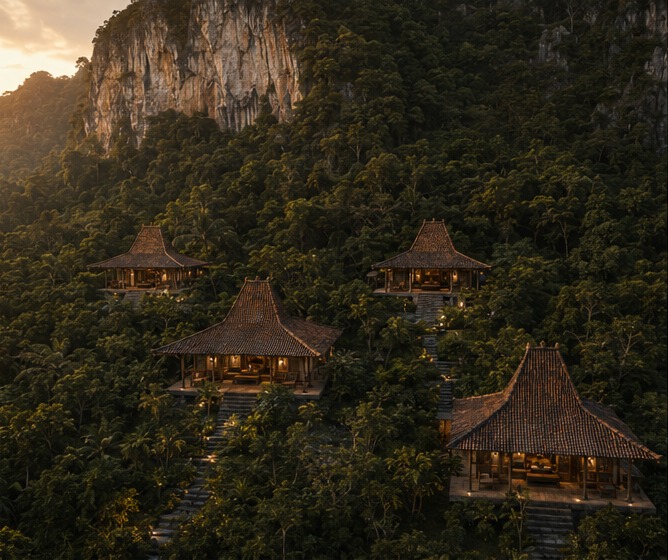
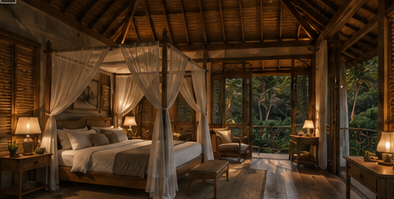
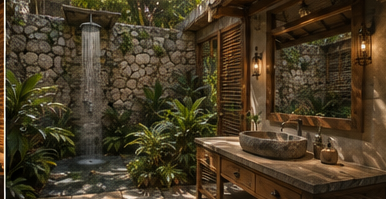
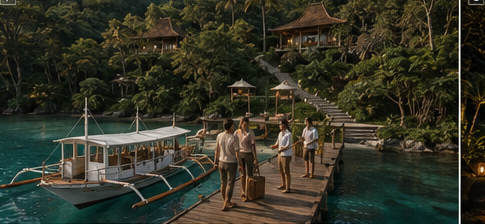
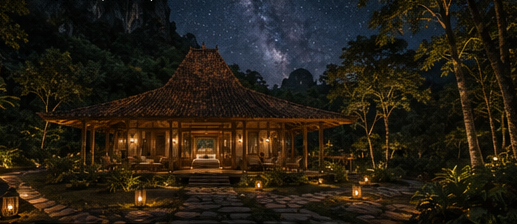


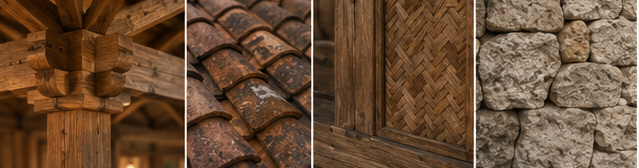
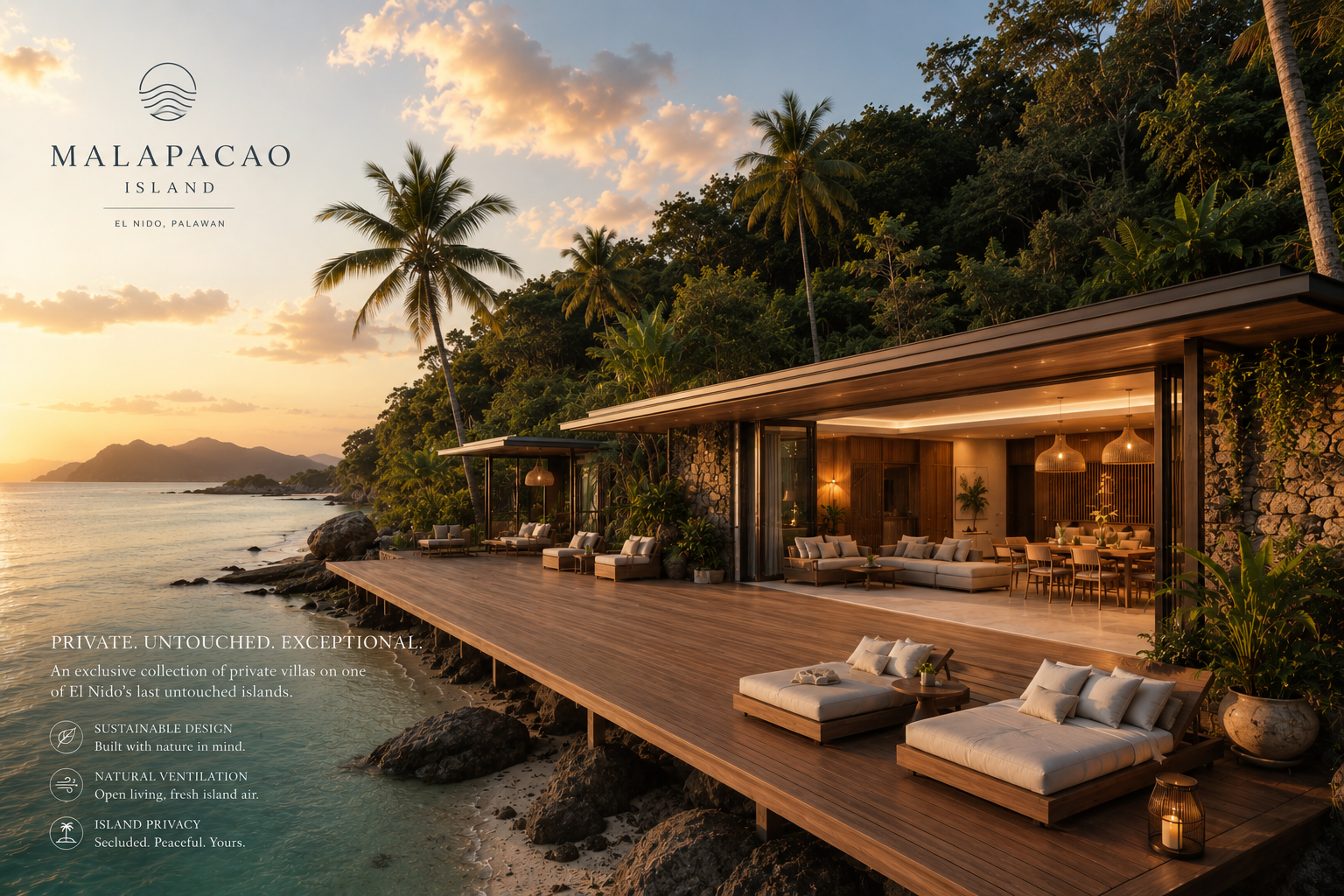
Artist's impressions — indicative of the design intent and guest experience.
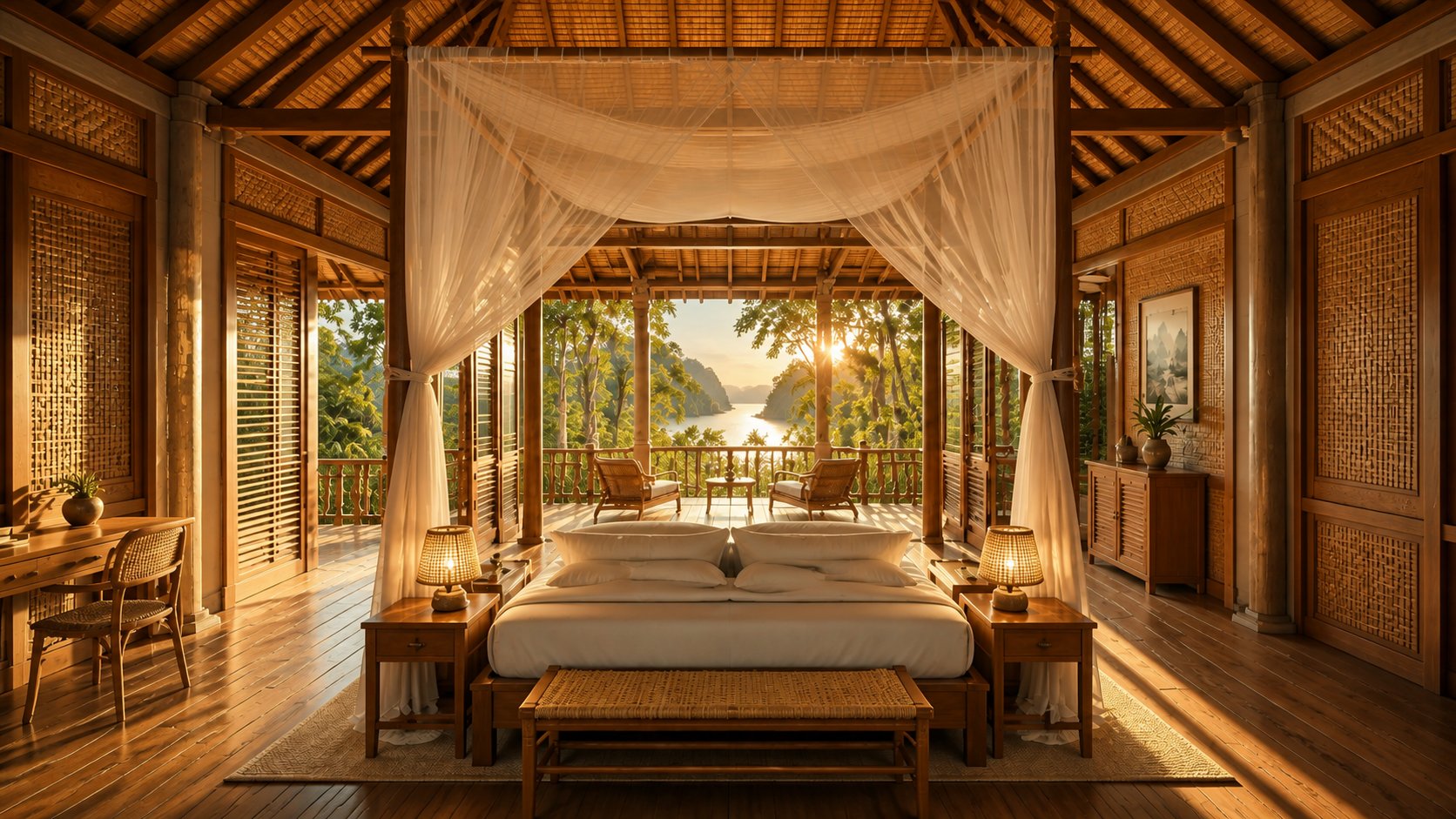
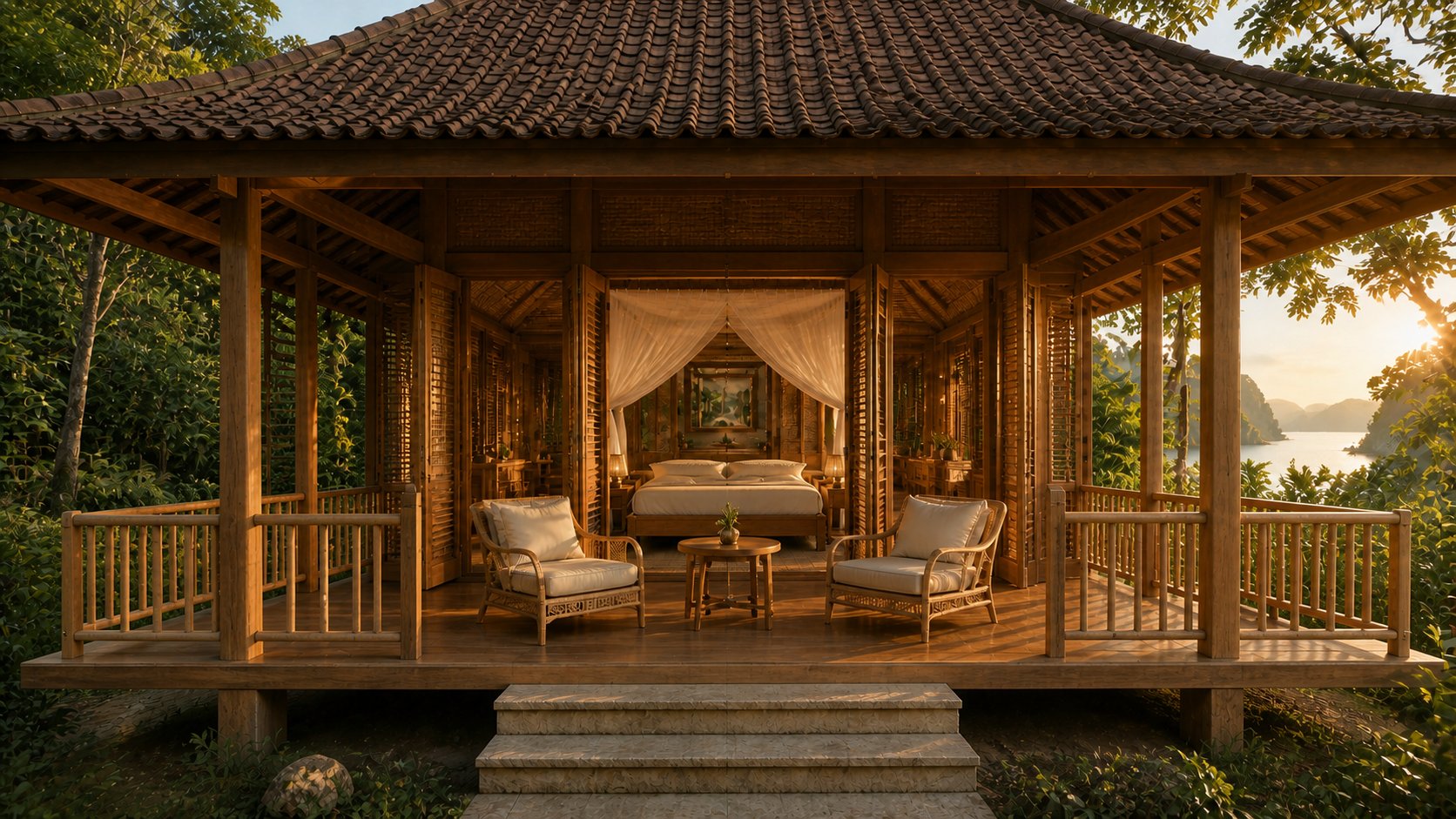
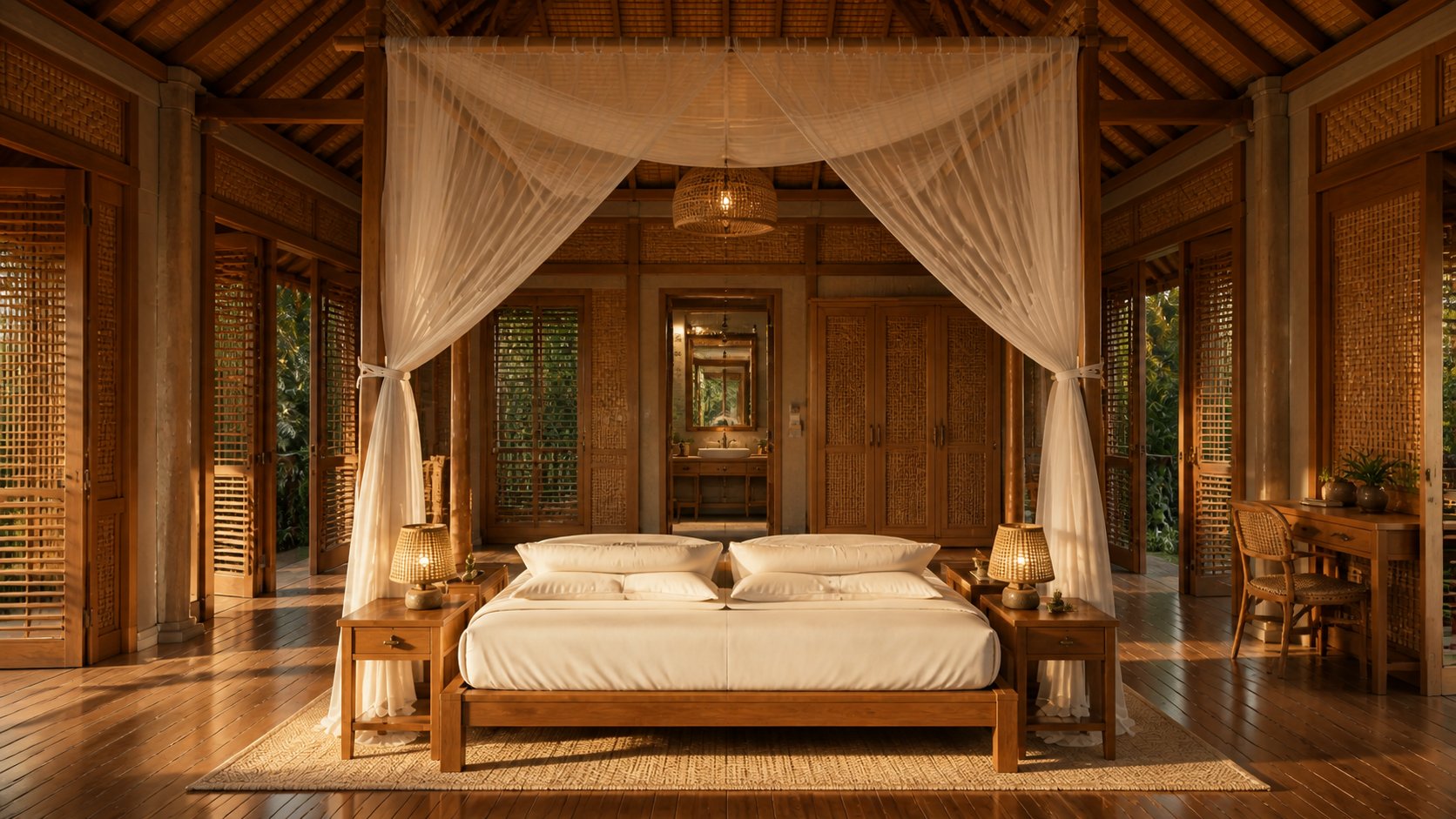
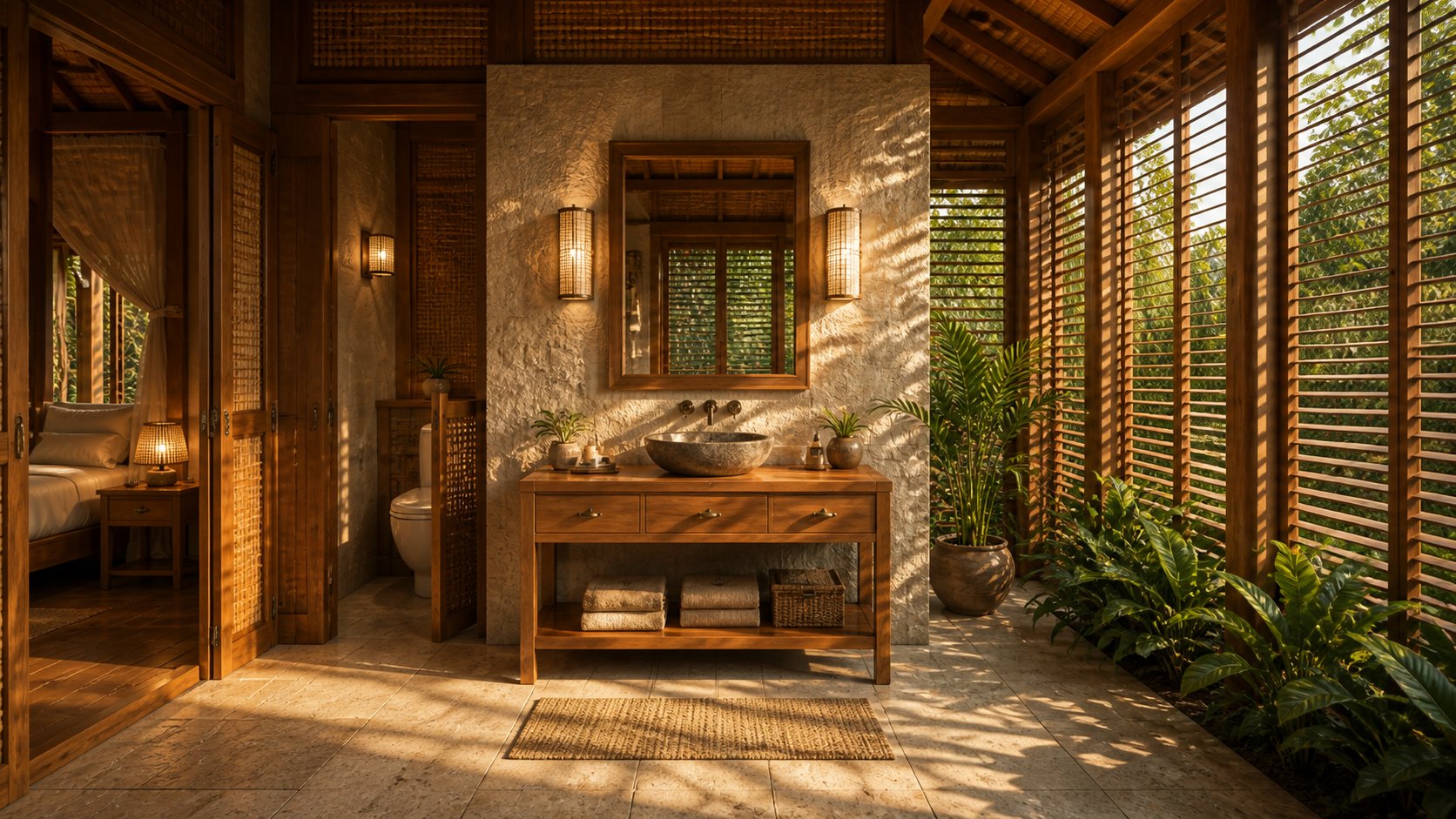
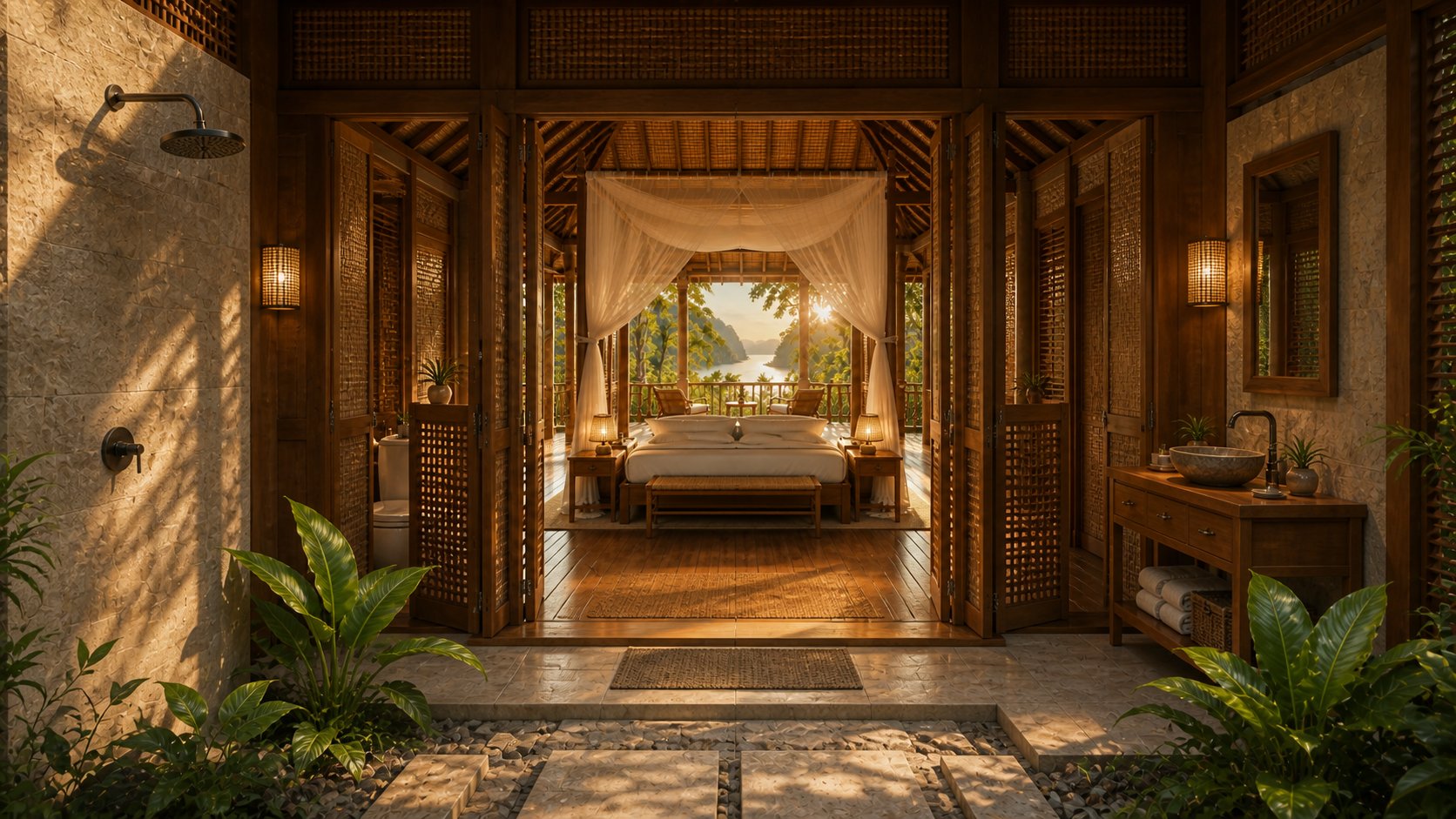
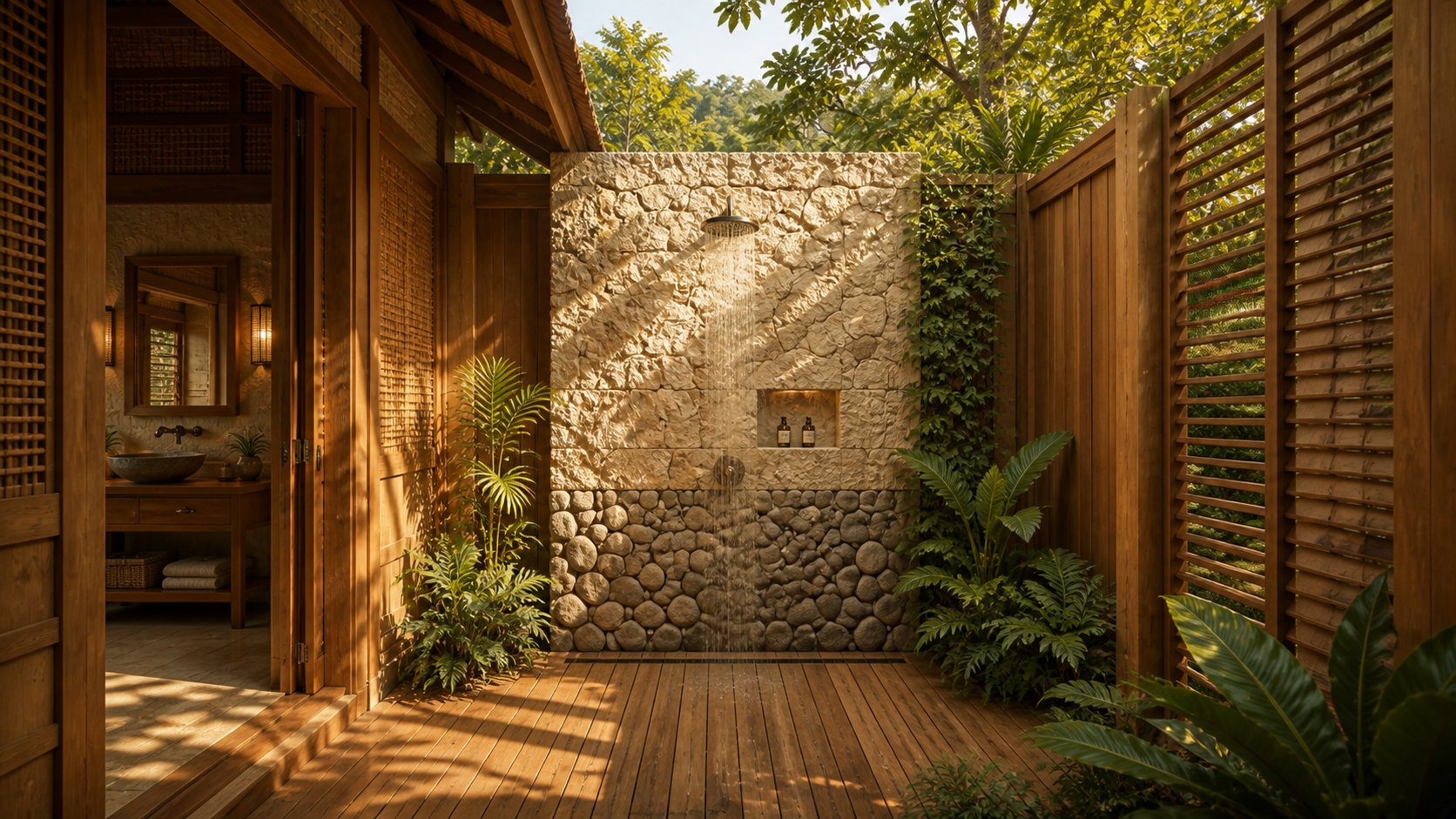
Artist's impressions — indicative of the design intent and final finishes.
A private island resort development in El Nido at a fraction of the cost of buying land outright — because the land is leased, not purchased. Investors fund construction only and receive full operating economics from day one.
Investors fund villa construction and infrastructure only. The 3,500 sqm beachfront island is contributed by the landowner on a 25-year lease at ₱1M/year — reducing investor capex by ₱25M+ vs. an outright purchase.
El Nido consistently ranks among Asia's top island destinations. Private villa ADRs of ₱15,000–₱85,000/night are the market standard. Malapacao enters at the conservative floor of this range.
Solar, battery storage, diesel backup, seawater desalination, and wastewater treatment are built into the development. No grid dependency. The island operates as a fully self-contained resort — a feature, not a constraint.
The financial model is built on 10 identical villas — a conservative base for 3,500 sqm of beachfront. Each unit is an identical revenue-generating module. The model scales linearly and is easy to stress-test.
Malapacao sits within the El Nido Protected Landscape and Seascape. The SAPA (Special Agreement for Protected Area) has been applied for under RA 7586, with Municipal LGU endorsements already secured — the key administrative milestone before PAMB approval.
The project is sponsored by Wolf Equity Partners, whose Siquijor flagship estate achieved 24.6% cash-on-cash in its third operating year with a 53.8% net margin — developed under the same build-yield-harvest model.
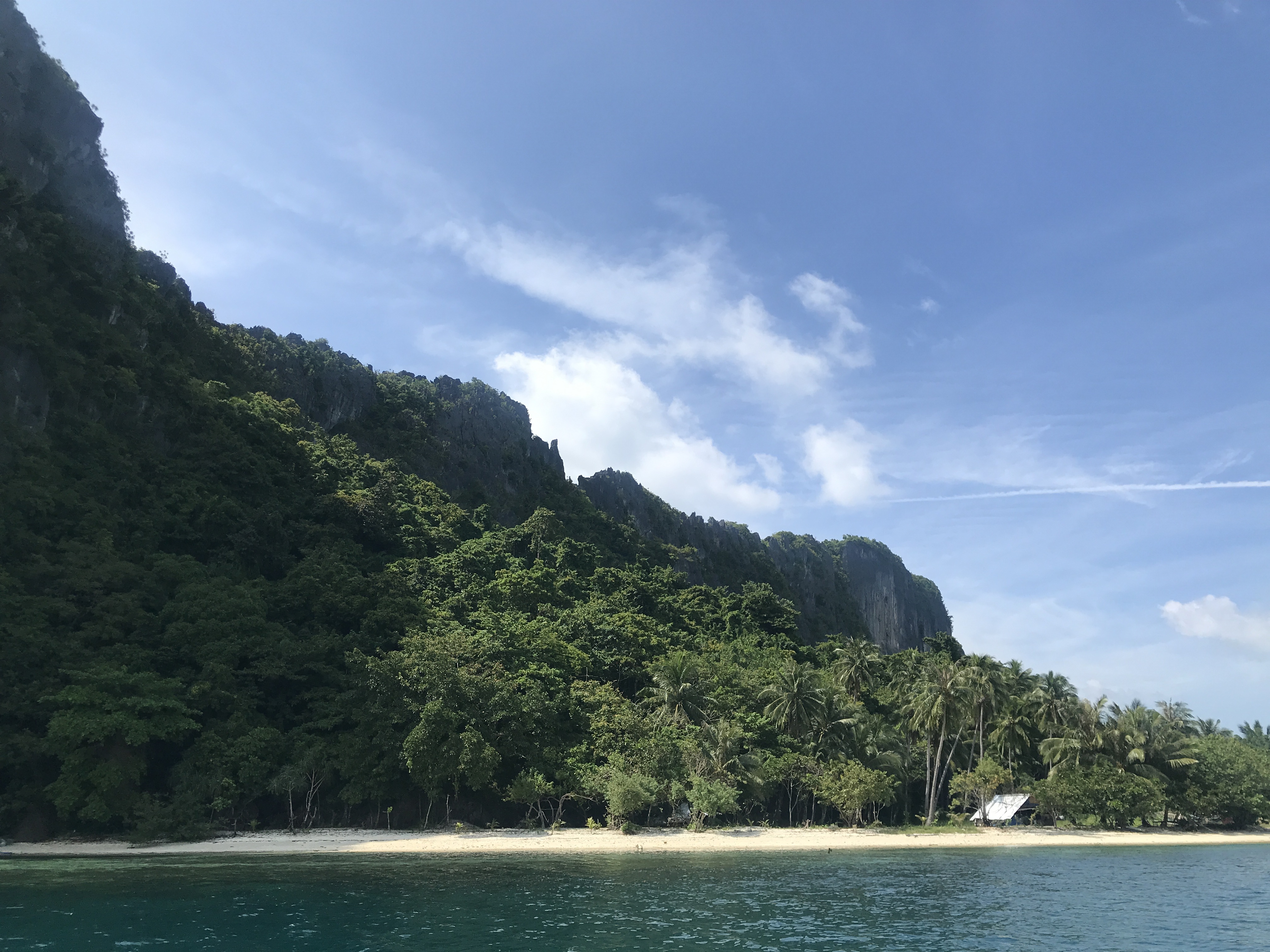
A beachfront island parcel in Bacuit Bay, El Nido, Palawan — the crown jewel of Philippine island tourism. Malapacao is a raised island with dramatic limestone cliffs, dense tropical vegetation, white sandy beaches, and clear waters with living coral reefs. It is less than a kilometre from shore, 15–25 minutes by boat from El Nido town proper.
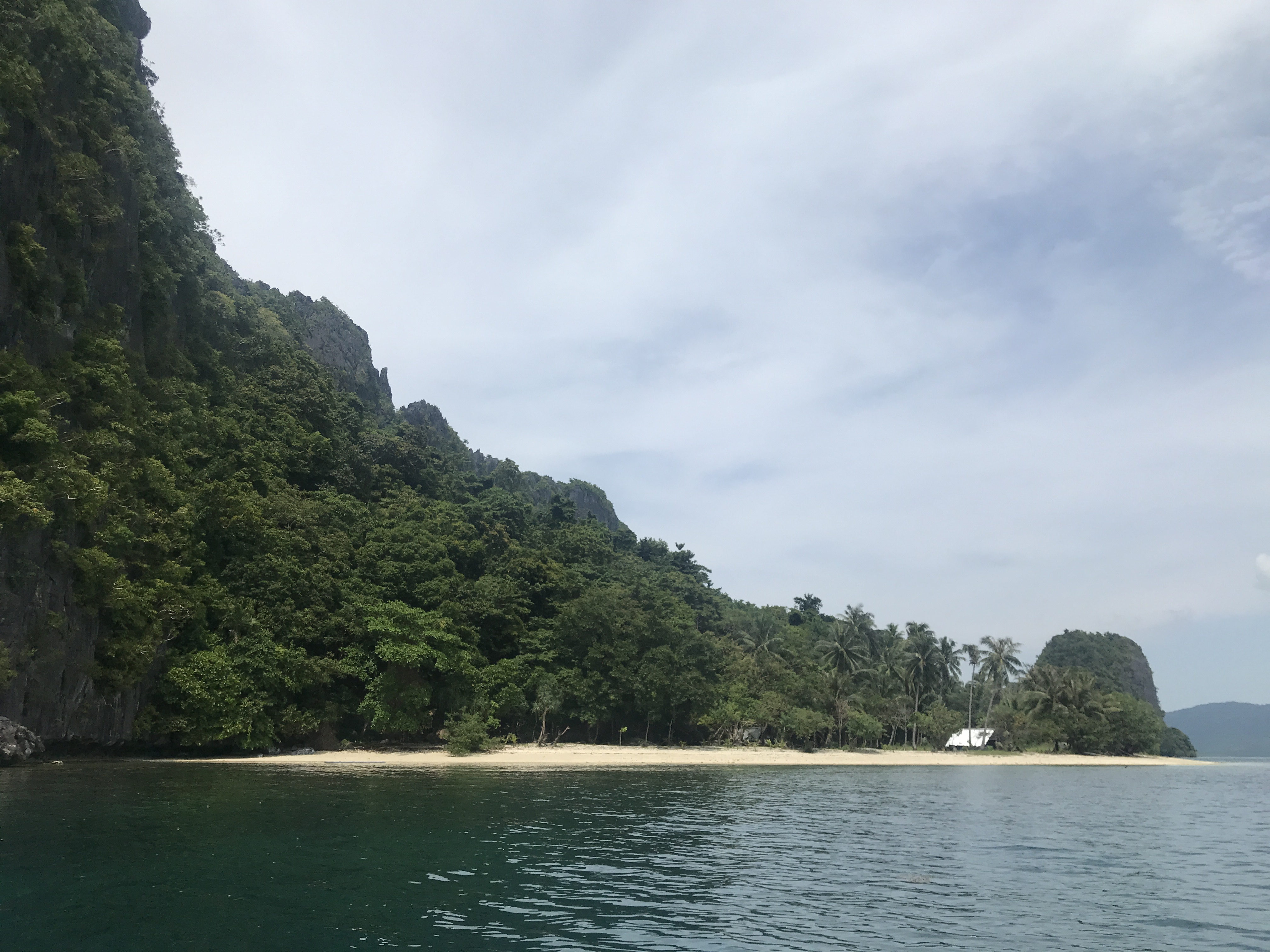
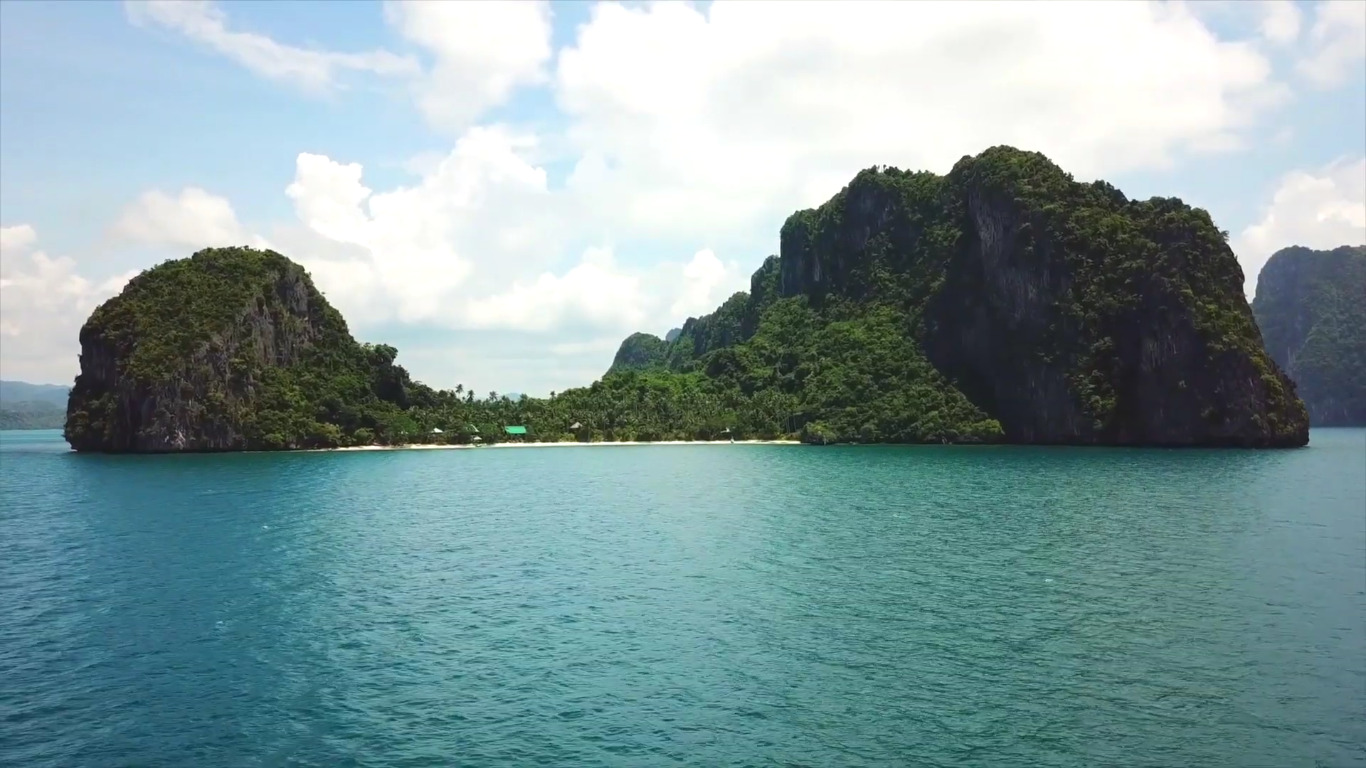
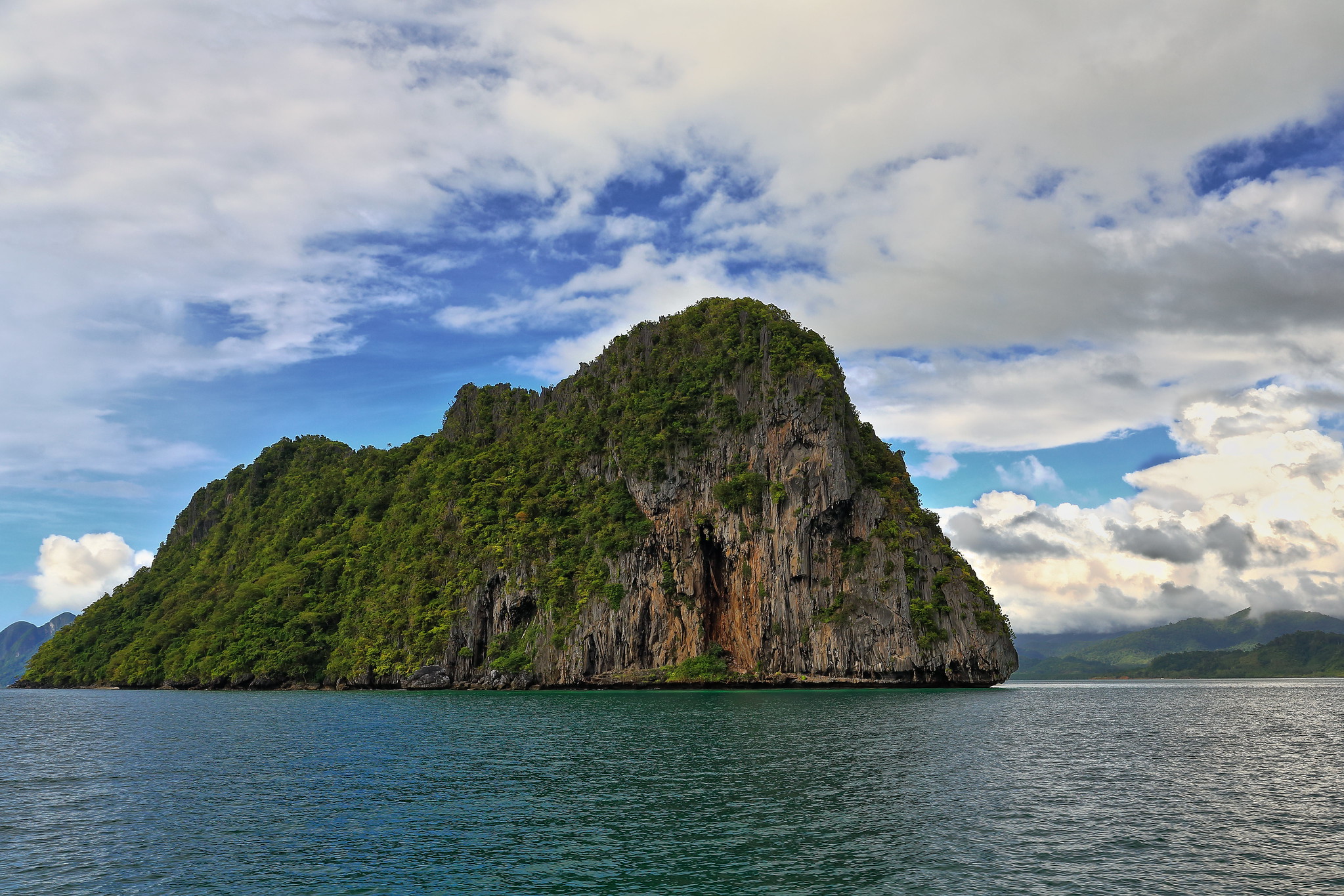
Malapacao Island sits within the El Nido Protected Landscape and Seascape, a declared protected area under the National Integrated Protected Areas System (NIPAS) Act (RA 7586). In protected areas, land use rights are formalized through a Special Agreement for Protected Area (SAPA) — the government-sanctioned land tenure instrument that authorizes sustainable commercial use, including eco-tourism development, within NIPAS zones. SAPA is not a workaround; it is the correct and legally recognized tenure path for this type of location. All major El Nido Resorts Group properties (Lagen, Miniloc, Pangulasian) operate under equivalent protected area agreements. Securing Municipal LGU endorsements — as this project has done — is the primary prerequisite for PAMB approval.
Ten private villas arranged across Malapacao's beachfront, each with direct sea access, private deck, and natural ventilation. Construction uses local hardwood, bamboo, and nipa palm — materials that perform in island conditions and read as premium to the international traveller.
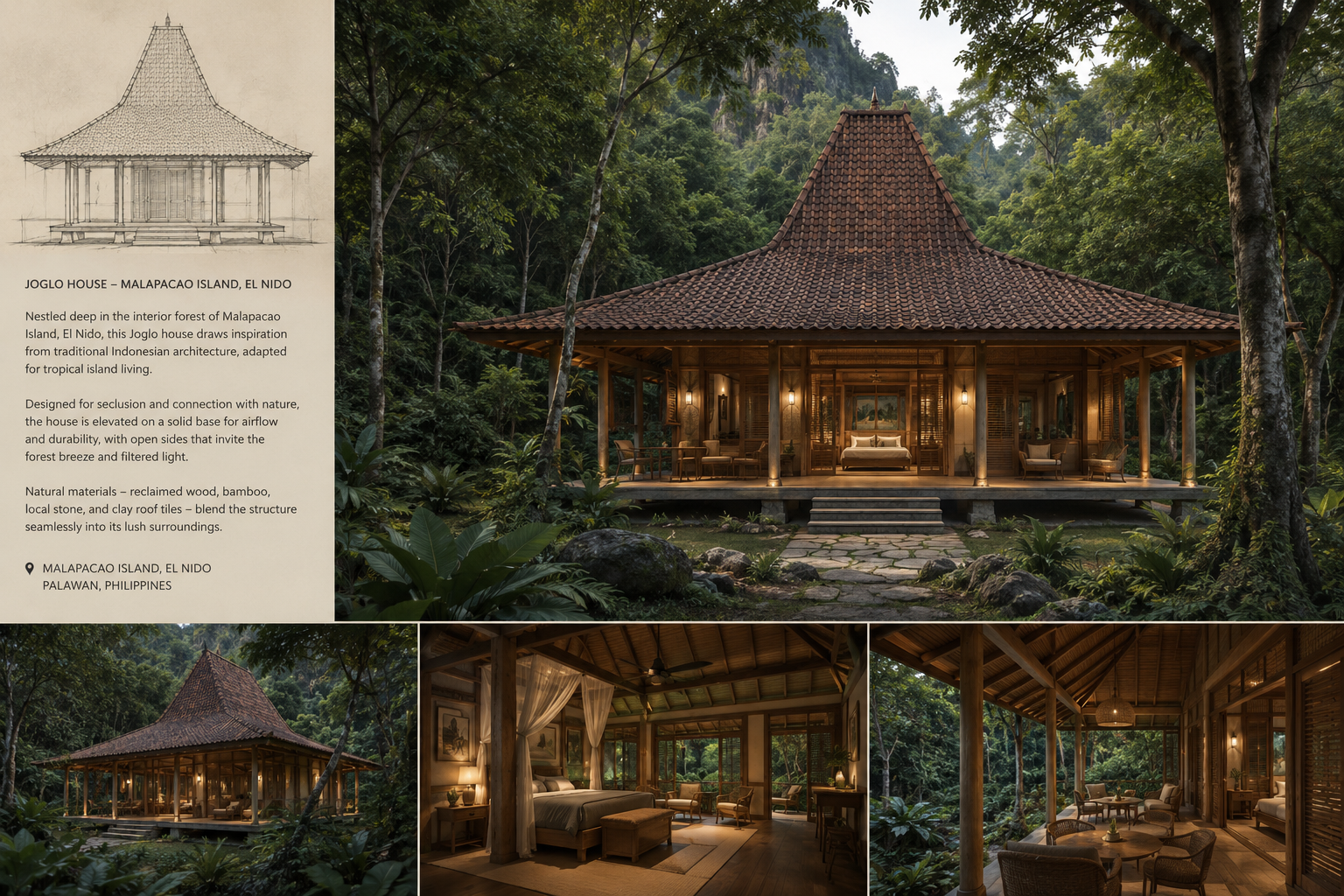
Preferred design direction — a Javanese Joglo adapted for tropical island living: a full teak frame elevated on a solid base for airflow and durability, open sides that invite the breeze and filtered light, and a clay-tile roof, using reclaimed wood, bamboo and local stone. Concept shown is indicative of design intent.
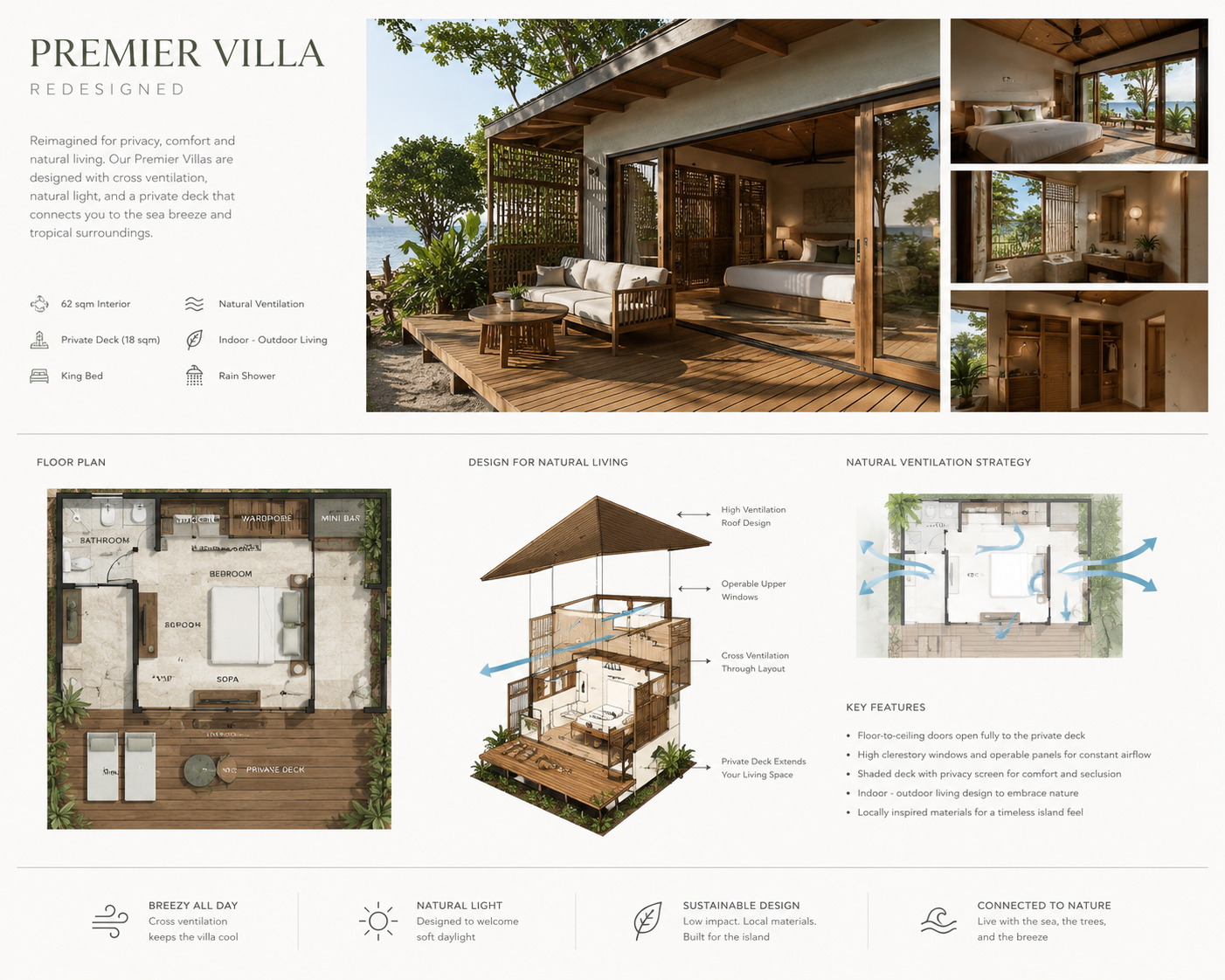
Premier Villa — redesigned for privacy, cross ventilation, and indoor-outdoor living. Floor plan, ventilation strategy, and interior perspectives shown are indicative of design intent; final finishes to be confirmed during design development.
One villa type. Ten units. Every guest gets the same experience — which is also the point. Malapacao does not stratify its guests into room categories. There is no superior room or standard room. There is one villa, and you have it to yourself.
Each unit sits directly on the beachfront, oriented west for sunset exposure. A hardwood deck extends over the sand, shaded by a thatched overhang. The bedroom faces the sea through louvred timber panels that open fully, removing the boundary between indoors and the water. A four-post bed and outdoor rain shower complete the unit — simple, natural, and exactly right for the setting.
Construction uses local materials — bamboo, hardwood, nipa palm, and coral stone — that perform in island conditions and read as premium to the international traveller. From the water, the ten villas present as a single cohesive retreat rather than a patchwork of competing styles.
Natural ventilation handles the majority of cooling. Ceiling fans and a discreet split unit provide backup. All power comes from the island's solar-battery system. Water from the seawater desalination plant. Connectivity via Starlink.
Year 1 assumes 35% occupancy — a conservative ramp for a new property building reviews and channel presence. The model reaches stabilised occupancy (55%) by Year 3. ADR held flat at ₱15,000/night throughout — no rate escalation assumed. All figures in Philippine Peso.
| Line Item | Year 1 | Year 2 | Year 3 | Year 4 | Year 5 |
|---|---|---|---|---|---|
| Occupancy Rate | 35% | 45% | 55% | 65% | 70% |
| Occupied Nights (10 villas) | 1,278 | 1,643 | 2,008 | 2,373 | 2,555 |
| ADR (₱/night) | 15,000 | 15,000 | 15,000 | 15,000 | 15,000 |
| Gross Revenue | ₱19,162,500 | ₱24,637,500 | ₱30,112,500 | ₱35,587,500 | ₱38,325,000 |
| Cost of Sales (30%) | (₱5,748,750) | (₱7,391,250) | (₱9,033,750) | (₱10,676,250) | (₱11,497,500) |
| Gross Profit | ₱13,413,750 | ₱17,246,250 | ₱21,078,750 | ₱24,911,250 | ₱26,827,500 |
| Gross Margin | 70% | 70% | 70% | 70% | 70% |
| Staff Salaries (est. 10 staff) | (₱3,000,000) | (₱3,150,000) | (₱3,307,500) | (₱3,472,875) | (₱3,646,519) |
| Land Lease | (₱1,000,000) | (₱1,000,000) | (₱1,000,000) | (₱1,100,000) | (₱1,100,000) |
| EBITDA | ₱9,413,750 | ₱13,096,250 | ₱16,771,250 | ₱20,338,375 | ₱22,080,981 |
| EBITDA Margin | 49.1% | 53.2% | 55.7% | 57.1% | 57.6% |
| Cash-on-Cash Return (₱50M capex) | 18.8% | 26.2% | 33.5% | 40.7% | 44.2% |
| * Cost of sales includes booking commissions, credit card charges, and channel fees. Staff salaries escalate 5% annually. Land lease escalates 10% every 3 years. No depreciation, financing costs, or maintenance capex assumed in base case. | |||||
| Metric | Per Villa (Year 1) | Notes |
|---|---|---|
| Gross Revenue (Year 1, 35% occ.) | ₱1,916,250 | 127.75 nights × ₱15,000 |
| Cost of Sales (30%) | (₱574,875) | Commissions, CC fees |
| Gross Profit | ₱1,341,375 | 70% gross margin |
| Gross Revenue (Year 3, 55% occ.) | ₱3,011,250 | 200.75 nights × ₱15,000 |
| Gross Profit (Year 3) | ₱2,107,875 | 70% gross margin |
| All-in Cost (incl. site/infra share) | ₱5,000,000 | ₱50M total / 10 villas |
| Payback Period (on Year 3 gross profit) | ~28 months | Stabilised occupancy basis |
Total investor capital of ₱50M covers villa construction, site development, landscaping, common areas, and island infrastructure. The land is contributed by the landowner under a 25-year lease — eliminating the single largest cost in a typical private island development.
The land is leased to the operating entity at ₱1,000,000 per year, escalating 10% every three years over a 25-year term. This provides the landowner a long-duration income stream while keeping investor capex lean. Lease payments are a fixed operating cost — fully modelled in the EBITDA above.
Exit value is calculated on the resort's stabilised EBITDA capitalised at a 10x multiple — consistent with Philippine boutique hospitality benchmarks. A 5-year hold assumes the resort reaches 70% occupancy before exit.
| Scenario | Exit EBITDA | Exit Multiple | Exit Value | Cumulative EBITDA | Total Return | MOIC |
|---|---|---|---|---|---|---|
| Conservative (Y3 exit) | ₱16,771,250 | 8x | ₱134,170,000 | ₱39,281,250 | ₱173,451,250 | 3.5x |
| Base Case (Y5 exit) | ₱22,080,981 | 10x | ₱220,809,810 | ₱81,700,606 | ₱302,510,416 | 6.1x |
| Upside (Y5 exit, 12x) | ₱22,080,981 | 12x | ₱264,971,772 | ₱81,700,606 | ₱346,672,378 | 6.9x |
| * Returns on ₱50M total investor capex. No financing costs assumed. EBITDA distributions received annually. Exit multiple range 8x–12x consistent with Philippine boutique resort transaction benchmarks. | ||||||
At 55% occupancy — the model's stabilised base. Year 1 opens at 18.8% (35% occ.) as the property builds reviews and channel presence. CoC reaches 44.2% by Year 5.
On ₱50M capex, with a conservative 35% Year 1 occupancy ramp and ₱220M exit at Year 5 (10x EBITDA). ADR held flat at ₱15,000 throughout — no rate growth assumed.
Total return of ₱302.5M on ₱50M across a 5-year hold. The conservative Year 3 exit at 8x returns 3.5x. Any ADR growth above ₱15,000 is pure upside — not in the model.
Three variables drive most of the variance in this model: construction cost, ADR, and occupancy ramp. The tables below show how Year 3 returns shift under each. All sensitivities are independent — only one variable changes at a time; all others stay at base case.
| Construction Cost / Villa | Total Capex | Year 3 EBITDA | Year 3 CoC | Variance vs. Base |
|---|---|---|---|---|
| ₱3.0M (base case) | ₱50,000,000 | ₱16,771,250 | 33.5% | — |
| ₱3.5M (+₱5M overrun) | ₱55,000,000 | ₱16,771,250 | 30.5% | –3.0pp |
| ₱4.0M (+₱10M overrun) | ₱60,000,000 | ₱16,771,250 | 28.0% | –5.5pp |
| * EBITDA unchanged — construction cost only affects the capex denominator, not operating cash flows. | ||||
| ADR at Year 3 (55% occupancy) | Year 3 Revenue | Year 3 EBITDA | Year 3 CoC | Variance vs. Base |
|---|---|---|---|---|
| ₱12,000 (discount scenario) | ₱24,090,000 | ₱12,955,250 | 25.9% | –7.6pp |
| ₱15,000 (base case) | ₱30,112,500 | ₱16,771,250 | 33.5% | — |
| ₱20,000 (modest premium) | ₱40,150,000 | ₱23,797,500 | 47.6% | +14.1pp |
| ₱25,000 (mid-market premium) | ₱50,187,500 | ₱30,823,750 | 61.6% | +28.1pp |
| * Lagen Island Resort starts at ₱51,000/night. A ₱25,000 ADR for Malapacao is still one-half of Lagen's floor rate — well within the market range for a private island product. | ||||
| Year 1 Occupancy | Year 1 EBITDA | Year 1 CoC | Year 3 CoC (55% by Y3) | Comment |
|---|---|---|---|---|
| 25% (very slow start) | ₱5,581,250 | 11.2% | 33.5% | Distributions cover opex; ramp unchanged |
| 35% (base case) | ₱9,413,750 | 18.8% | 33.5% | Conservative new-property ramp |
| 50% (faster adoption) | ₱15,162,500 | 30.3% | 33.5% | Strong channel pick-up from launch |
| * Year 3 CoC is identical across scenarios because by Year 3 the model converges to 55% occupancy regardless of the Year 1 starting point. Year 1 occupancy only affects early distribution timing — not the long-run returns. | ||||
Malapacao's island location means there is no connection to the Philippine grid or municipal water system. This is not a limitation — it is an operational advantage. The resort is engineered as a fully self-contained system, reducing utility dependency and enhancing the premium isolation narrative for guests.
Primary power source. Solar array sized for full daytime resort operations with lithium battery bank providing overnight capacity. System designed for 10-villa load including air conditioning, lighting, and F&B operations.
Secondary power source for extended cloudy periods or peak demand spikes. Sized as a failsafe only — the solar-battery system handles standard operations. Diesel consumption is budgeted as a minor operating cost.
Reverse osmosis desalination plant provides potable water from the surrounding sea. Output sized for 10 villas plus F&B at full occupancy. No dependency on barge water deliveries or rainfall collection.
On-island biological wastewater treatment system with safe discharge compliance. Designed to DENR standards for marine discharge. Enables responsible operation in an ecologically sensitive marine environment.
Dedicated boat transfer service from El Nido town proper. Journey time 15–25 minutes. Resort operates its own bangka for guest transfers, supply runs, and island excursions — 15-minute ride from Corong-Corong beach.
Starlink satellite internet provides reliable connectivity for guests and operations. The ability to work remotely from a private island is a direct marketing asset for the growing digital nomad and bleisure travel segment.
El Nido is consistently ranked among Asia's top island destinations by Conde Nast Traveller, Travel + Leisure, and Lonely Planet. International arrivals have grown 20%+ annually pre-COVID and recovery has been sharp. Private villa ADRs in the ₱15,000–₱85,000 range are the market standard — Malapacao is priced at the conservative floor of this band.
Malapacao's target ADR of ₱15,000/night sits at the conservative entry point of the El Nido luxury market. Established island resorts in the same archipelago charge 2x to 5x that rate. There is no downward pricing pressure — El Nido has a chronic undersupply of quality island accommodation relative to international demand.
| Resort | Category | Units | ADR Range (₱/night) | High Season ADR | vs. Malapacao |
|---|---|---|---|---|---|
| Pangulasian Island Resort El Nido Resorts Group · Private island |
Island Resort | 42 | ₱50,000–₱77,000 | ₱120,000+ | 3.3–5x |
| Lagen Island Resort El Nido Resorts Group · Private island |
Island Resort | ~50 | ₱51,000–₱85,000 | ₱107,000+ | 3.4–5.7x |
| Miniloc Island Resort El Nido Resorts Group · Closed for renovation 2026 |
Island Resort | ~30 | ₱14,500–₱27,000 | ₱35,000+ | 1–1.8x |
| Vellago Resort Adults-only boutique · Seven Commandos Beach · 6 units |
Boutique | 6 | ₱16,000–₱49,000 | ₱60,000+ | 1.1–3.3x |
| Malapacao Island Wolf Equity Partners · Base case ADR |
Private Island Villa | 10 | ₱15,000 | ₱15,000 | Base case (no escalation) |
| * ADR ranges converted at ₱57/USD. Sources: KAYAK, Booking.com, official resort rates (June 2026). Pangulasian and Lagen are full-board packages; Malapacao is room-only in base case. Miniloc closed Nov 2025–Dec 2026 for renovation. | |||||
The ₱15,000 ADR used in all projections matches Miniloc's base entry rate — the lowest of the four established competitors. Lagen and Pangulasian average ₱65,000–₱75,000/night. Malapacao has real rate upside as the product matures.
Miniloc Island Resort is closed from November 2025 through end of 2026 for renovation — removing ~30 island units from El Nido's premium supply precisely during Malapacao's development and launch window.
A 33% ADR increase to ₱20,000/night — still well below Vellago's upper tier — would lift Year 1 EBITDA to ~₱21M and CoC to ~42%. Rate growth is not modelled in the base case; it is an available lever.
Malapacao Island sits in the northeast arc of Bacuit Bay, 15–25 minutes by boat from El Nido town — close enough to town for easy supply runs and airport transfers, far enough for full seclusion. The established El Nido Resorts properties (Lagen, Miniloc, Pangulasian) cluster in the southern and central bay. Malapacao occupies a distinct northern pocket with less boat traffic and better proximity to town.
* Marker positions are illustrative. Distances are approximate.
Malapacao is developed under the Wolf Equity Partners build-yield-harvest model — the same model that produced a 24.6% cash-on-cash return and 53.8% net margin at the Siquijor Flagship Estate in its third operating year.
This memorandum presents a base case projection. Actual results will differ. Key risks include:
Base case assumes 50% Year 1 occupancy. If actual occupancy is 35%, Year 1 EBITDA falls to ~₱9.6M (19.2% CoC) — still strongly positive. Break-even occupancy is approximately 18%.
Island construction in El Nido carries material and logistics premiums. The ₱50M budget includes a ₱5M contingency buffer. A 10% overrun would increase total capex to ₱53M — reducing Year 1 CoC to ~28.6%, still strong.
SAPA application has been filed and LGU endorsements secured. PAMB approval is the next milestone. While approvals for NIPAS-compliant eco-tourism have historically been granted, timeline is not guaranteed. Development will not begin until PAMB approval is in hand.
This opportunity is available to a small group of co-investors. Direct inquiries only.